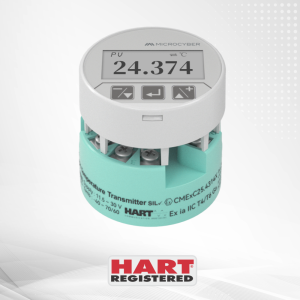
Microcyber is a professional temperature transmitter manufacturer providing smart temperature measurement solutions for industrial process applications. Our temperature transmitters support HART, FOUNDATION Fieldbus, PROFIBUS PA and WirelessHART communication protocols, offering reliable solutions for oil & gas, chemical, power and automation industries.
¿Por qué elegir los transmisores de temperatura Microcyber?
Ambos FCG y PNO certificados, para que los dispositivos se registren correctamente e intercambien datos con hosts como Emerson AMS y Siemens PDM.
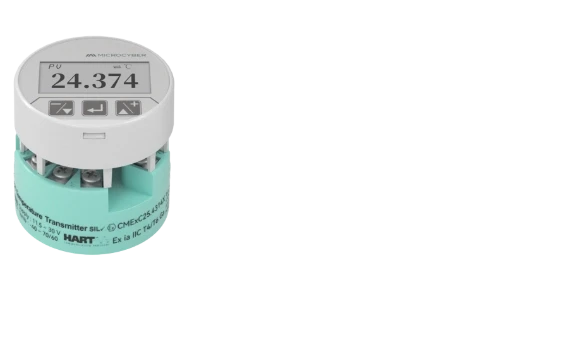
Temperature transmitters serve as the interface between field temperature sensors and process control systems. They accept measurement signals from standard industrial sensors, including RTDs and thermocouples, and convert them into standardized 4–20 mA + HART signals for transmission to the control system.
Temperature transmitters can be configured according to the requirements of the measurement process, including the required temperature range. They can also provide over-range alarm functions. When the measured temperature moves outside the defined operating range, the transmitter can send an alarm to the control system to support process monitoring and operational safety.
Temperature transmitters also offer flexible installation options. Depending on the application, the transmitter can be integrated with the sensor or thermowell for direct installation at the measurement point, or installed separately from the sensor when remote installation is preferred. This flexibility allows the installation to be adapted to different wiring, environmental, and maintenance requirements.
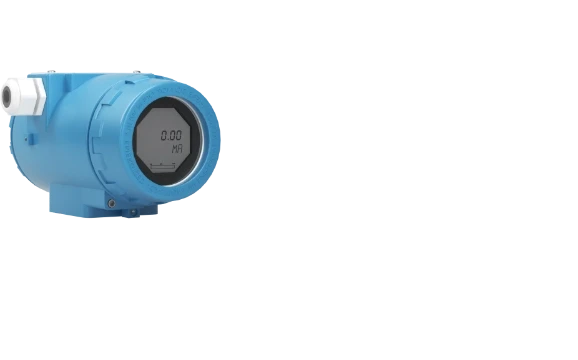
The NCS-TT305H is a digital temperature transmitter designed for reliable and accurate temperature measurement in industrial applications. It integrates a high-performance 24-bit ADC to provide high measurement accuracy, long-term stability, and reliable operation in demanding field environments.
As a true dual-channel temperature transmitter, the NCS-TT305H uses a six-terminal sensor connection and supports multiple dual-input combinations. This configuration is particularly suitable for applications where measurement accuracy is critical or sensor redundancy is required.
For demanding industrial environments, the transmitter uses an LM25 low-copper aluminum alloy field-mount housing. ATEx flameproof and IECEx intrinsically safe certifications are available, and the device has undergone assessment in accordance with IEC 61508 for SIL2/SIL3 applications. These features support reliable and safe operation in complex industrial process environments.
For temperature transmitters installed in chemical, oil and gas, petrochemical, marine, and coastal environments, housing material plays an important role in long-term reliability. Exposure to corrosive conditions can affect equipment service life and the stability of field instrumentation.
In addition to conventional stainless-steel housings, high-corrosion-resistance aluminum alloys provide an alternative where lower weight and material cost are important considerations. The low-copper LM25 aluminum alloy used for the NCS-TT305 series is designed to provide high corrosion resistance while maintaining the advantages of an aluminum housing.
This low-copper housing construction makes the NCS-TT305 series suitable for demanding industrial environments where resistance to corrosion, long-term durability, and reliable field operation are important considerations.
¿Qué modelos de transmisores de temperatura Microcyber soportan el protocolo HART 7 y cuáles son sus beneficios?
¿Qué tipos de entradas de sensor admiten los transmisores de temperatura Microcyber?
¿Cuál es el rango de temperatura de operación de los transmisores de temperatura Microcyber montados en la cabeza?
¿Qué es un transmisor de temperatura?
Los principales tipos de sensores de temperatura son: * **Termopares:** Son sensibles a la temperatura y se utilizan en una amplia gama de aplicaciones. * **Termistores:** Son resistencias que cambian de valor con la temperatura. Son muy precisos y se utilizan en aplicaciones médicas y de automoción. * **Detectores de temperatura de resistencia (RTD):** Son sensores de temperatura lineales y precisos que se utilizan en aplicaciones industriales y de laboratorio. * **Sensores de temperatura por infrarrojos:** Miden la temperatura a distancia en función de la radiación infrarroja emitida por un objeto. * **Termómetros bimetálicos:** Utilizan dos metales con distintos coeficientes de expansión térmica para crear un dispositivo que se dobla mecánicamente con los cambios de temperatura.
Los transmisores de temperatura se utilizan en una amplia variedad de aplicaciones industriales y comerciales.