


Many temperature transmitters are advertised as “HART compatible,” but compatibility alone does not guarantee that a device has been tested against the complete HART protocol specification. For system integrators and plant engineers, there is an important distinction between supporting HART communication and being officially registered by FieldComm Group.
What HART Registration Actually Tests
The HART Communication Protocol is maintained by FieldComm Group (FCG), which also runs the product registration program. Registration is not self-certification. Manufacturers submit engineering samples to the FCG lab, where devices are tested against a comprehensive set of HART protocol specifications covering the physical layer, data link layer, application layer, and command implementation. Tests cover physical layer signal timing and amplitude (FSK modulation per HCF_SPEC-54), correct implementation of Universal Commands required by the HART specification, Common Practice Commands relevant to the device type, and response behavior under multi-master scenarios.
A device that passes is assigned an official Manufacturer ID and Device Type identifier. These two codes are embedded in firmware and identify the device uniquely to any HART host — DCS, handheld HART communicator, or asset management software — regardless of who made the host system.
This matters in practice because most major DCS platforms use the Manufacturer ID and Device Type to load the correct Device Description (DD) or Electronic Device Description (EDD) file when a HART device is detected on the loop. With the right DD file loaded, the host can read sensor type, range limits, damping setting, and self-diagnostic alerts through HART digital communication — on the same two wires already carrying the 4–20 mA signal. Without a matching DD or EDD file, depending on the host system, the device may be recognized only as a generic HART device, and those parameters become inaccessible through the host interface.

Microcyber’s Registration and Development Services
Microcyber holds FCG Manufacturer ID 000105 and has maintained FCG Development Services Provider status since June 2013. As a Development Services Provider, Microcyber offers HART, Foundation Fieldbus, and PROFIBUS protocol stacks, embedded communication modules, device certification testing, and DCS host integration testing services. Clients whose products have been registered through Microcyber’s development support include Emerson Process Management, Mettler-Toledo GmbH, Metroval Controle de Fluidos Ltda., Enertork Ltd., and Chongqing Chuanyi Automation Co., Ltd.
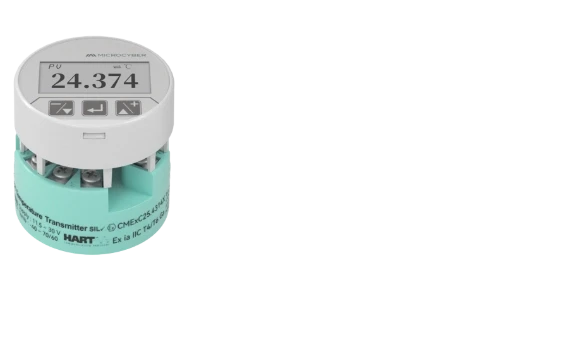
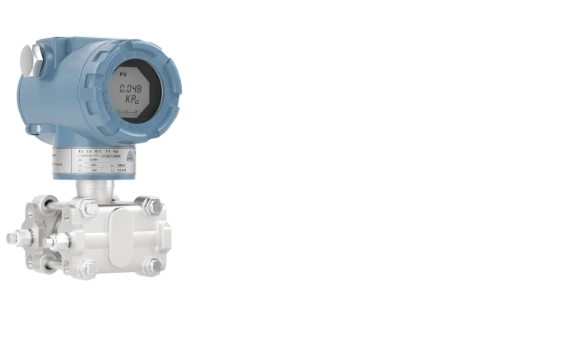
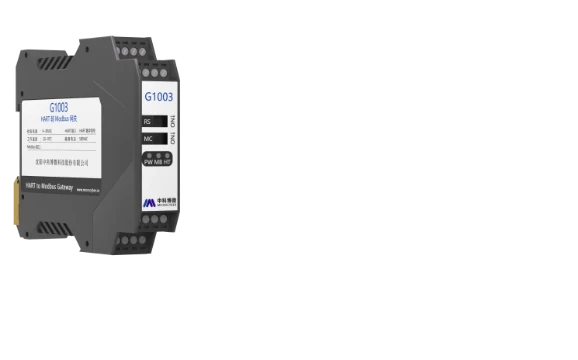
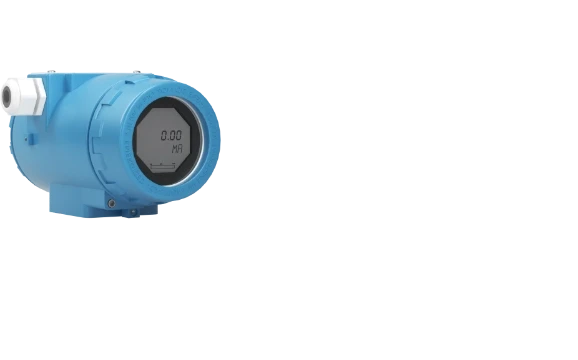
Microcyber’s temperature transmitter product line — including the NCS-TT106 (head-mounted, HART 7), NCS-TT105 (field-mounted, HART/FF/PA), and NCS-TT108 (multi-channel, HART/FF/PA) — is registered in the FCG Product Registry, along with pressure transmitters, signal converters, and WirelessHART modules.
Registration certificates for NCS-TT106H, NCS-TT105, NCS-PT105, and M1100S are published on the Microcyber certifications page. Microcyber’s FCG Development Services Provider profile is listed at fieldcommgroup.org.
Before Installation: Confirming DD File Availability
FCG registration confirms protocol conformance. It does not guarantee that a specific DCS host already has the DD file in its library. Before specifying a HART device for a project, verify with the DCS vendor or check the host’s device library that a DD or EDD file exists for the Manufacturer ID and Device Type in question. Generic HART operation will still function without a matching file, but device-specific parameters will not be accessible through the host interface.
For the NCS-TT106H, the transmitter operates on a standard 4–20 mA loop at 12–42 VDC (non-IS) or 12–30 VDC (IS version), with 1 KVAC electrical isolation between the bus and module housing. A minimum loop resistance of approximately 230 Ω is required for HART communication; the maximum allowable load depends on supply voltage and loop configuration.
DD files for Microcyber products can be requested at info@microcyber.cn.